CEDAR
70 X 38 X 31 INCHES
COURTESY OF THE NANCY A. NASHER AND DAVID J. HAEMISEGGER COLLECTION
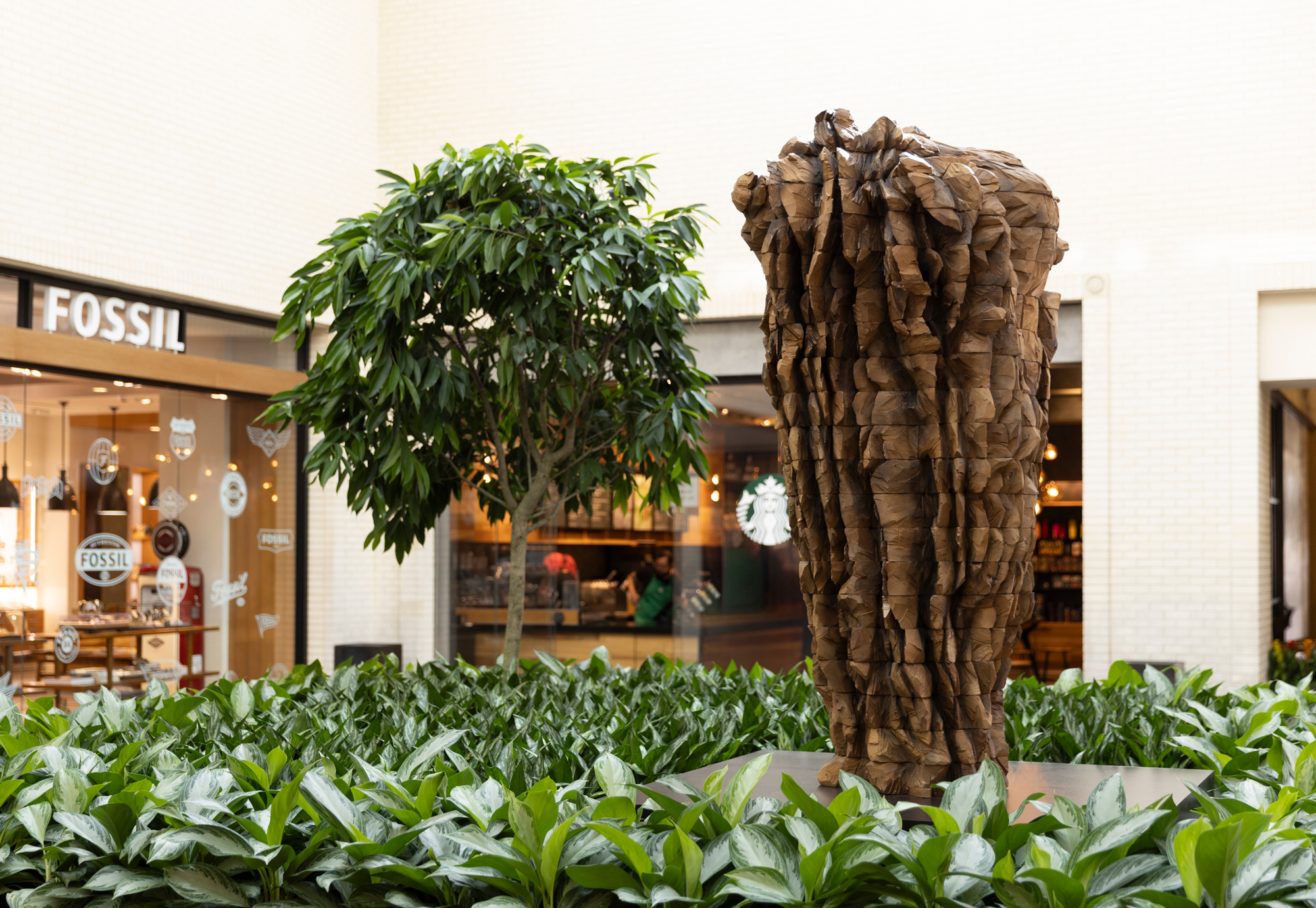
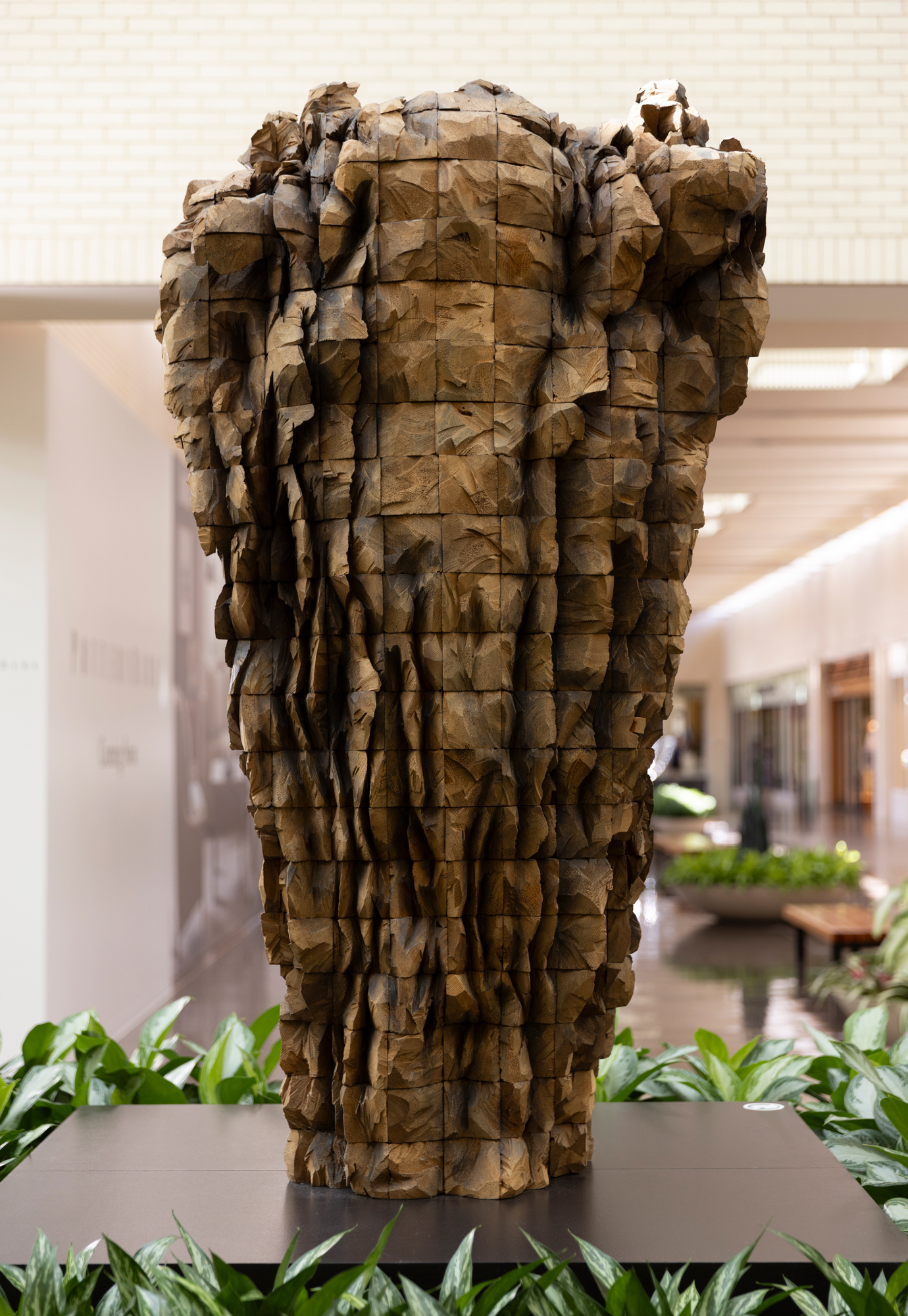
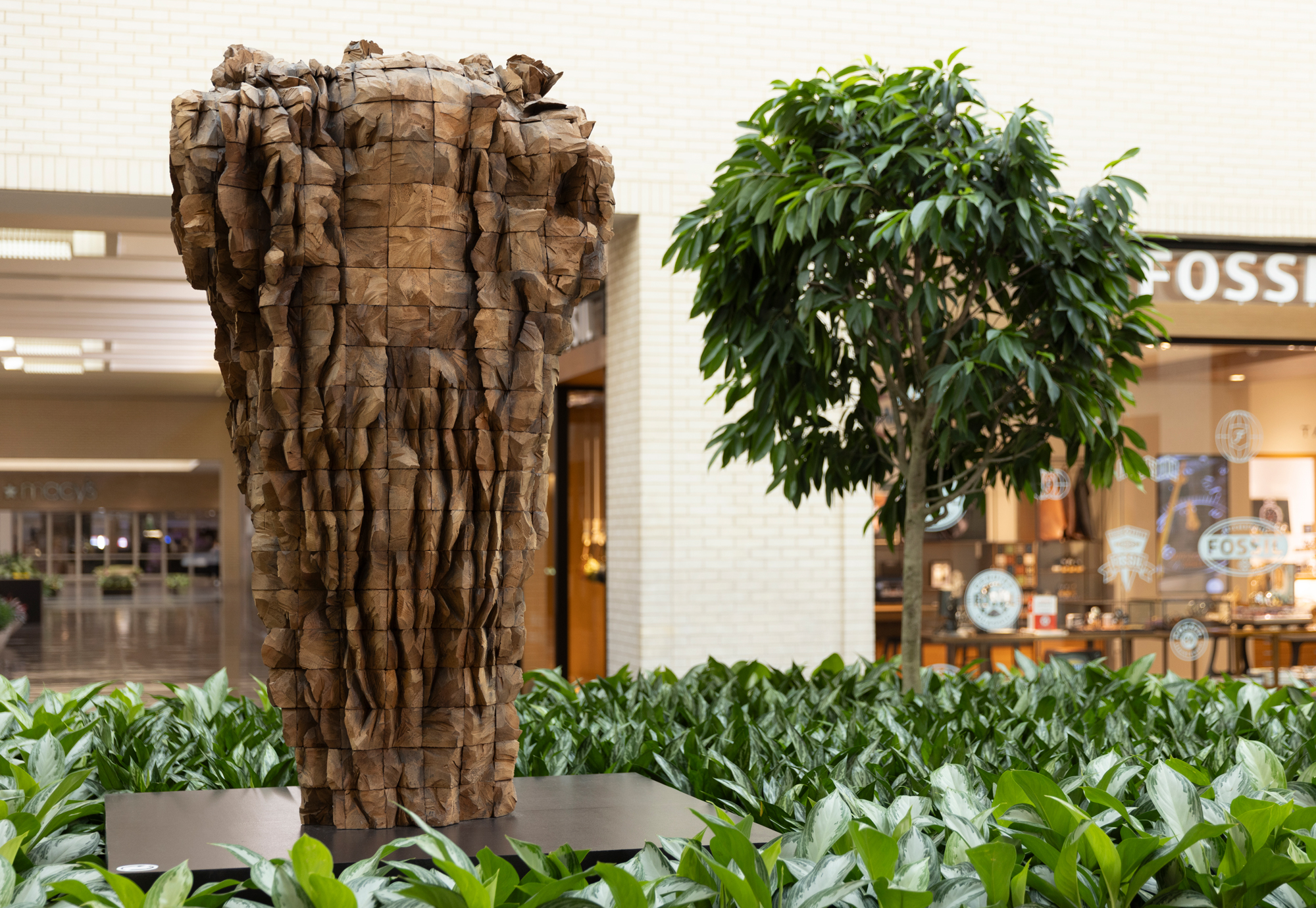
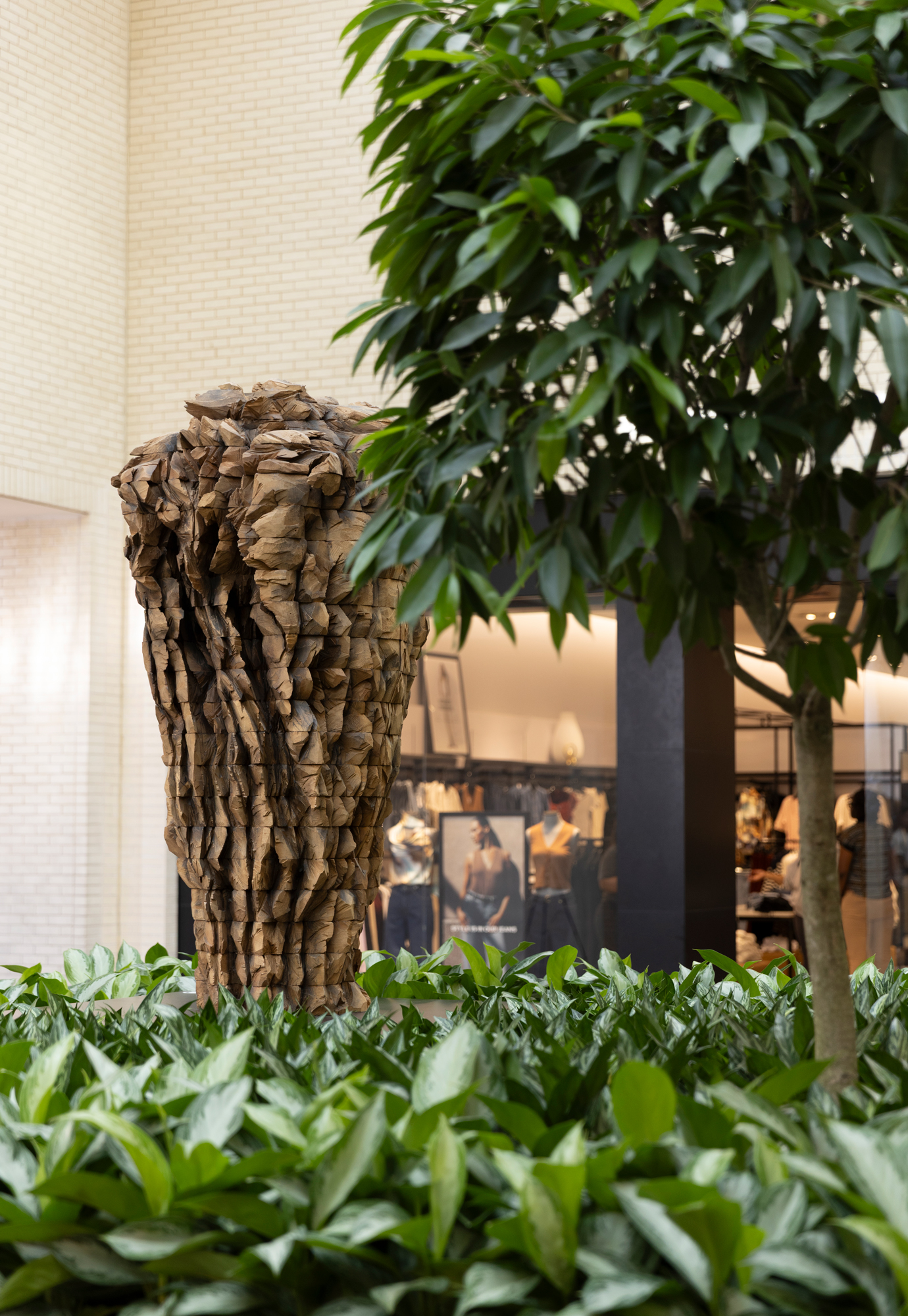
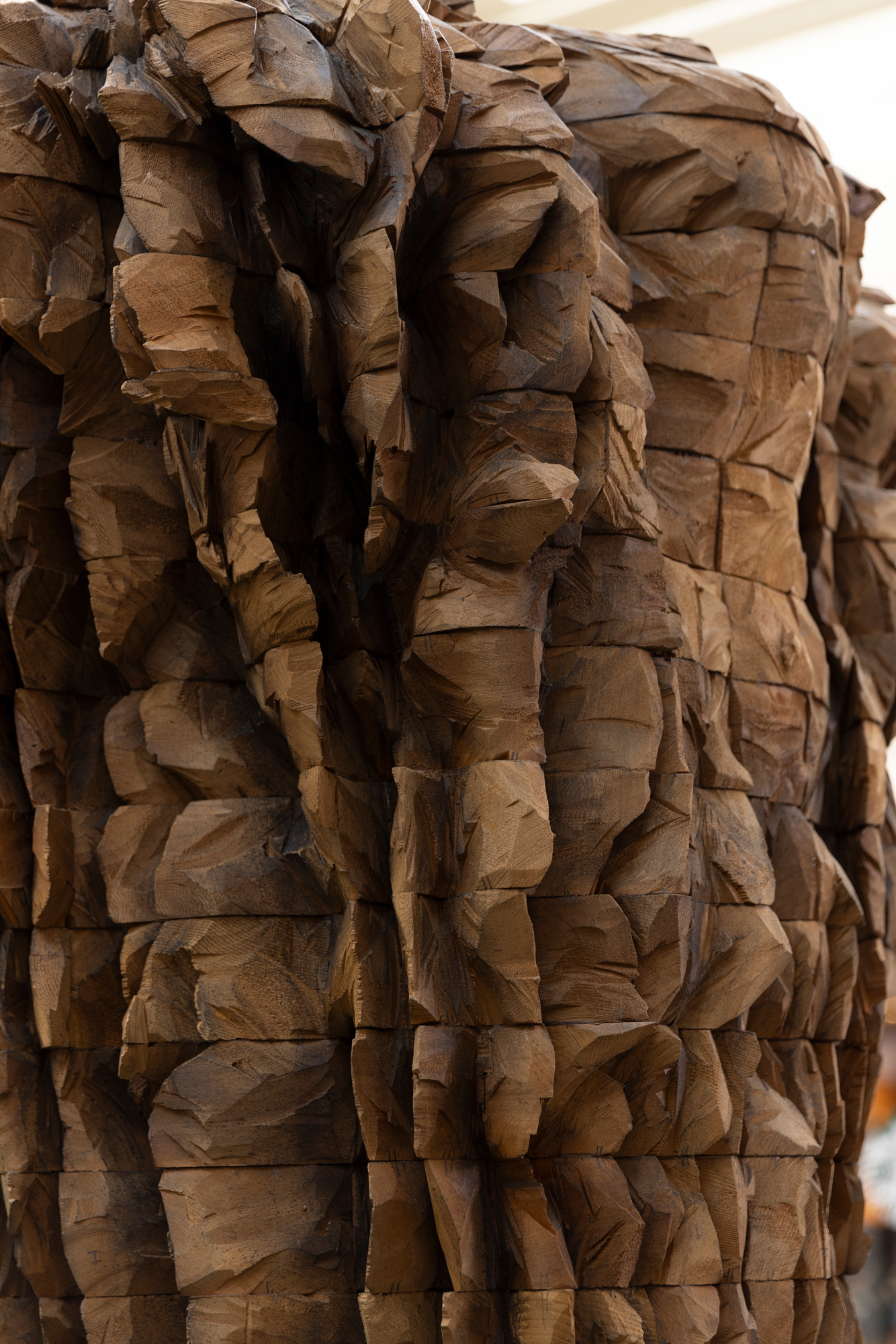
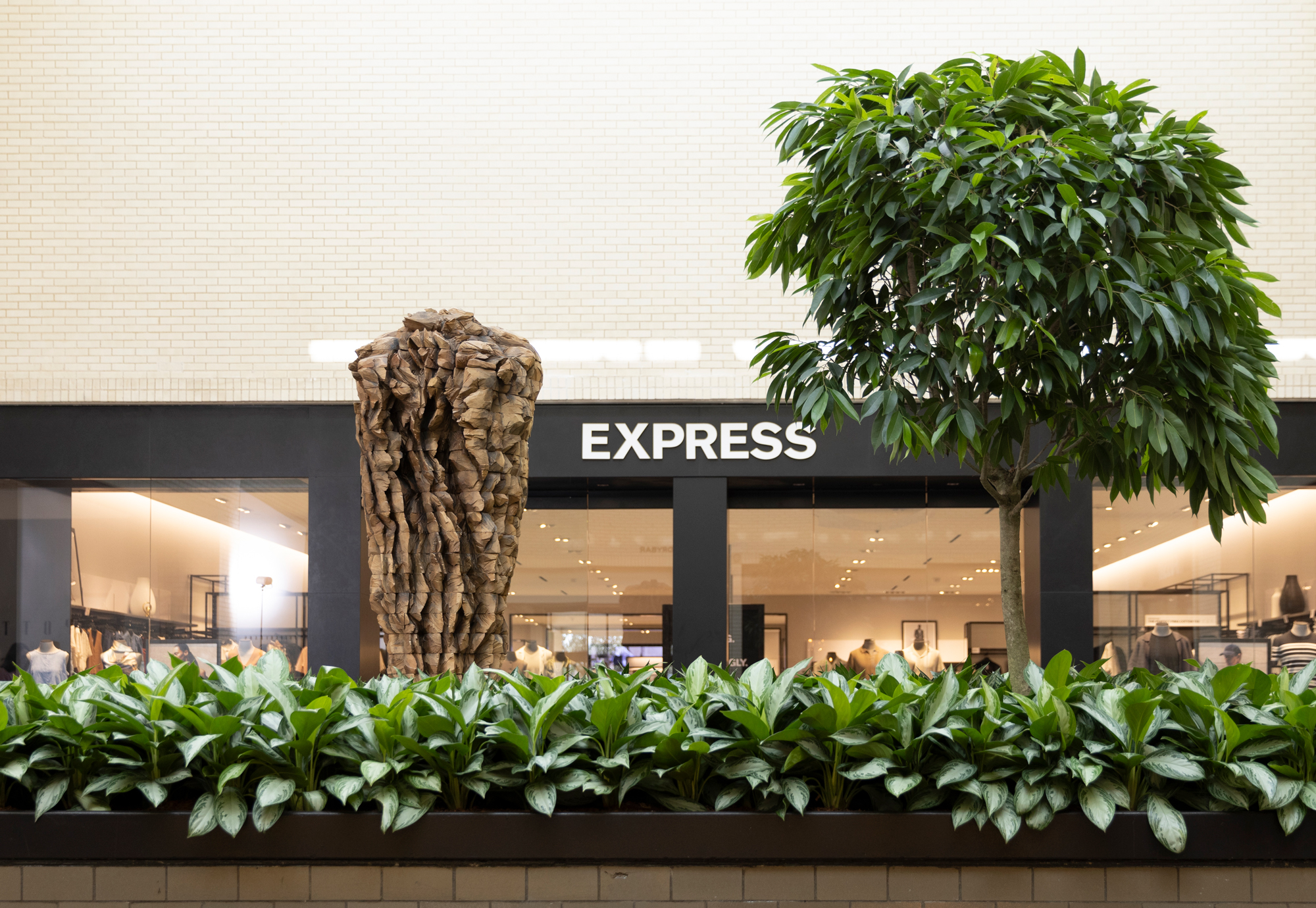
Manilla is a large-scale sculpture that exemplifies Ursula von Rydingsvard’s exploration of form, texture, and materiality through hand-carved cedar wood. The piece is a towering structure with dramatic vertical ridges and folds, creating a surface that feels both architectural and organic. The sculpture’s outer form seems to oscillate between strength and vulnerability, and its contours suggest swelling, constricting, and rising natural forms, like a tornado, a rock face, or a termite mound.
Though abstract, Manilla carries strong emotional and symbolic resonance. The title may evoke multiple associations, including the historical “manilla” currency once used in West African trade or the general reference to a place or object of passage. Von Rydingsvard often selects titles that are evocative without being prescriptive, leaving room for personal interpretation while grounding the work in a larger cultural or emotional framework.
The work is carved from stacked cedar beams, a hallmark of von Rydingsvard’s process, and later rubbed with graphite, giving it a rich, dark, silvery patina. This finish enhances the surface depth and adds a sense of age or weathering, as if the sculpture has patinaed over time. Manilla reflects von Rydingsvard’s ongoing themes of resilience, identity, and the tactile memory embedded in natural materials. It stands as a powerful example of her ability to merge the physicality of her labor with emotional depth and resonance.